Your clinicians are working around the software.
Sticky notes on monitors. Printed checklists taped beside screens. A shadow spreadsheet quietly doing the job a seven figure system was bought to do. We have seen it in EHRs, clinical decision support, telehealth and 340B, and we know why it happens.
The Problem Is Real
Bad healthcare UX is not just frustrating. It harms patients.
Physician Burnout
Documentation overload is driving record numbers of physicians out of practice.
Clinical Errors
Poorly designed interfaces harm patients every day.
Alert Fatigue
Badly designed notification systems lead to ignored warnings, including critical ones.
Workflow Inefficiencies
Hours wasted that could be spent on actual care.
These aren't hypothetical problems. They're why we exist.
What the work taught us.
Here's what you can't learn from a 2-week "discovery sprint":
Clinical workflows aren't broken because of bad design
They're complex because healthcare itself is complex. Simplification without understanding causes harm.
A "simpler" medication ordering interface that doesn't account for drug interactions, allergy checks, and dosing protocols isn't better. It's dangerous.
Regulatory constraints aren't obstacles to "work around"
HIPAA, FDA requirements, clinical documentation standards: these aren't bureaucratic red tape. They're design requirements that shape the solution space.
Good healthcare UX works within these constraints, not against them.
Stakeholder alignment means getting everyone on the same page
Physicians, nurses, administrators, compliance teams, IT departments: all have different priorities, different vocabularies, different success metrics.
That requires facilitation skills and strategic workshops, not just wireframes.
User adoption isn't about "intuitive UI"
It's about trust. Clinicians need to know the system won't slow them down during critical moments or create liability risk.
"Easy to use" means nothing if they don't trust it in high-stakes situations.
Where this came from.
Over years, we've learned healthcare UX by:
Shadowing clinicians in actual care settings
Understanding EHR/EMR architecture constraints
Navigating FDA submission processes
Designing for both efficiency AND safety
Speaking the language of healthcare administrators, not just end users
Facilitating alignment across clinical, technical, and business stakeholders
Healthcare is where we go deepest.
Healthcare is where our expertise runs deepest, so that's where we focus most of our work. While our core focus is clinical and health-tech products, we're always open to partnering with teams in other industries when the problem space aligns with our expertise and we can create real value.
Healthcare companies hire us because we show up on Day 1 already understanding:
What "clinical decision support" actually means in practice
Why documentation burden is the #1 physician complaint
How reimbursement models shape feature priorities
What "interoperability" roadblocks look like in real implementations
Which regulatory requirements are non-negotiable vs. guideline-based
It was a huge time-saver. The plug-in-ready front end let our dev team focus on backend integration without worrying about design iterations. Compared to working with a typical design agency, the turnaround here was faster and more aligned to our engineering needs. It made the overall development cycle lighter, and our developers could slot the UI in with minimal friction.

Raghav Gaopande
Director, Devnco Technologies
Enterprise Document Intelligence • B2B SaaS • Delivered in 8 weeks
What does the design work actually involve?
Domain expertise alone isn't enough. We're researchers and facilitators first, designers second.
What does that look like inside a project?
Research & Workshops
We run stakeholder alignment workshops, user research sessions, and usability testing, because good design starts with understanding the problem space, not jumping to solutions.
Roadmap Building
We help you prioritize what to build first based on user pain points, regulatory requirements, and business constraints, not just what's "cool."
Collaboration Blockers
We identify and fix organizational issues that kill projects: misaligned stakeholders, unclear decision-making, unrealistic timelines.
Co-Creation
We don't throw designs over the wall. We work alongside your team, in workshops, in Figma, in user testing sessions, because the best solutions come from collaboration.
User Testing
We design, facilitate, and synthesize usability testing with actual clinicians, not just internal teams pretending to be users.
AI + Craft = Speed Without Shortcuts
We use AI tools (like Lovable.dev for rapid wireframing, Claude for research synthesis) not to replace expertise, but to amplify it.
Read more: An AI for UX v2.0: How I Used AI for Research in 2025
Example:
For a 20-year-old EMR redesign, we used AI to generate 15 wireframe variations in hours. But it took 15 years of healthcare UX experience to know which variation wouldn't create patient safety risks.
That's the difference between "fast" and "fast + right."
We take healthcare work when the depth actually matters.
We're healthcare UX specialists who do interaction design, research, and strategic facilitation, and we only take on projects where that depth actually matters. If you need someone to make your app "look pretty," we're the wrong fit.
If you need someone who can:
Diagnose why your clinical workflow redesign failed adoption
Facilitate stakeholder alignment across 5 departments
Design a solution that physicians will actually trust in high-stakes moments
Navigate regulatory constraints while still innovating
Run user research that uncovers real problems, not just surface complaints
...we should talk.
Book Discovery Call
skipthesmalltalk@thirtytwonorth.com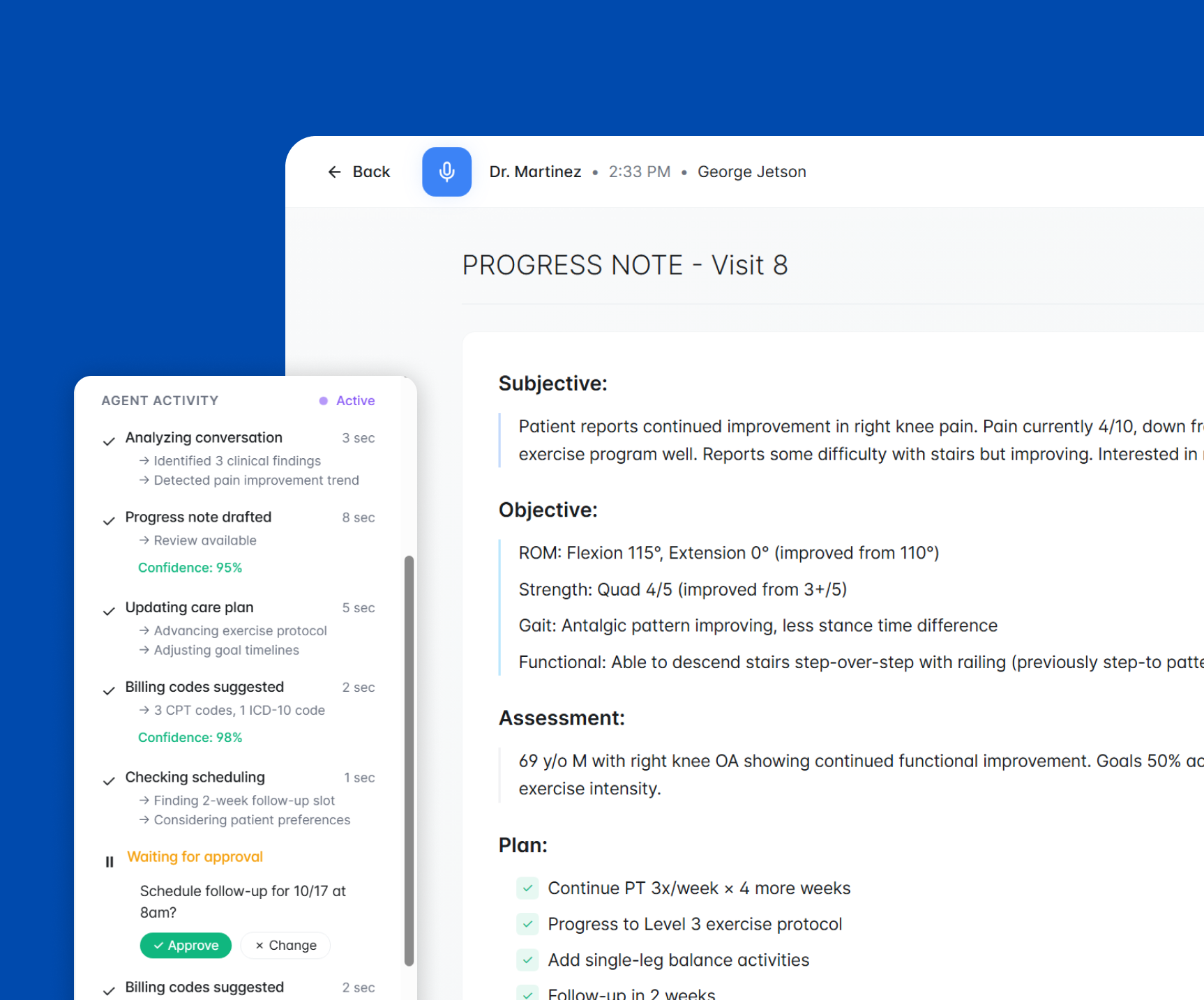
The Agentic EMR Experiment: Building the Future We're Describing
An Internal Design Challenge That Became a Functional Prototype
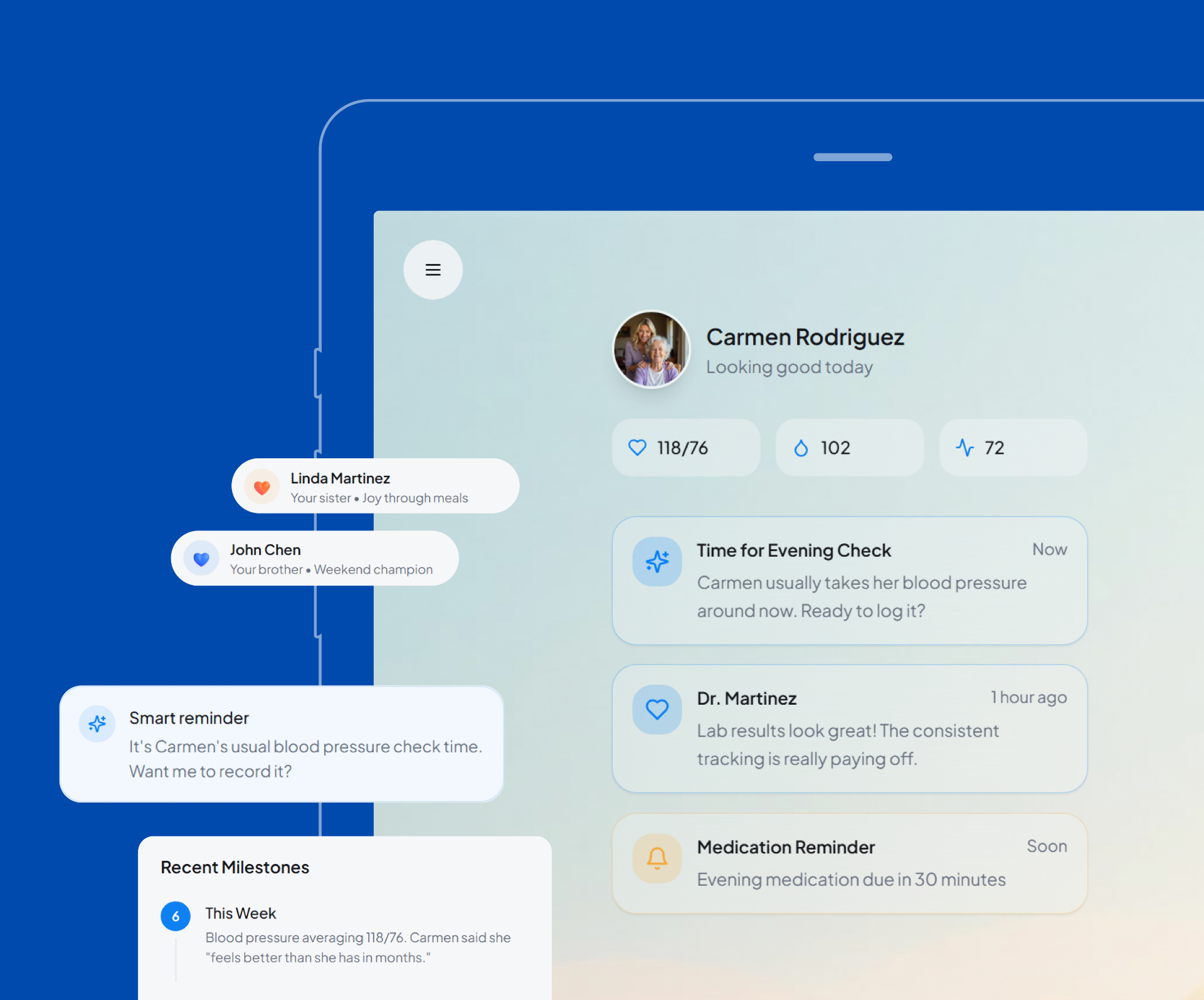
Uncovering the Hidden Caregiver Experience
Transforming Virtual Care Delivery
They already shipped with us
Ready to turn 11%
adoption into 68%?
Thirty minutes. We will tell you what is actually broken, and whether we are the right people to fix it.
We've told people to build internally when that made more sense.
We named it that for a reason.